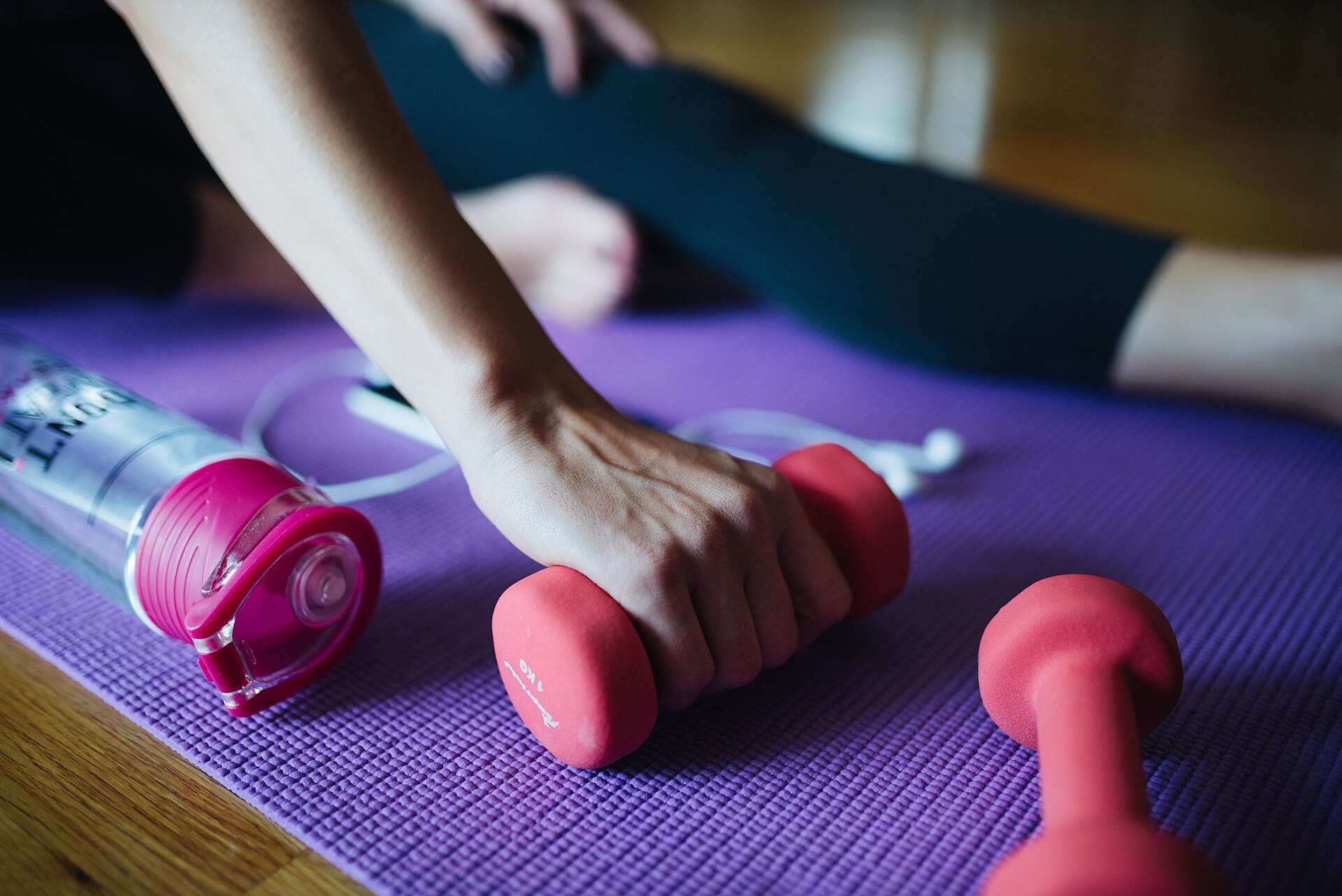
A full set of fixed dumbbells from 5 to 50 pounds costs well over a thousand dollars and eats an entire wall of your garage. A good pair of adjustable dumbbells replaces that whole rack for a fraction of the price and the footprint of a shoebox. This guide breaks down the three adjustment systems, the specs that actually matter, and how to pick the pair you will still be happy with in five years.
Why adjustable dumbbells are the first home-gym purchase
Dumbbells are the most versatile strength tool you can own: presses, rows, lunges, carries, curls, and dozens of single-limb movements that barbells cannot do. The problem with fixed dumbbells is math. A 5–50 lb set in 5-lb increments is ten pairs, roughly 1,500 pounds of iron, and a rack that costs almost as much as the weights. Most home gyms never get there — people buy two or three pairs and stall out when they outgrow them.
Adjustables solve both problems at once. You get 5-lb increments (sometimes 2.5-lb) from a single pair, the footprint of a large shoebox, and a price that lands between $150 and $550 depending on the system. For a spare bedroom, garage corner, or apartment, they are the highest value-per-square-foot strength purchase you can make.
They are not perfect. Most adjustables are bulkier than a fixed dumbbell of the same weight, some cannot be dropped, and the adjustment mechanisms add moving parts that can wear. The guide below helps you weigh those trade-offs honestly.
The three adjustment systems, explained
Dial-a-weight (selectorized): you twist a dial on the handle and the dumbbell picks up only the plates you selected from the cradle. Change takes about three seconds. This is the fastest system and the most popular for home gyms. Downsides: the internal mechanism is complex, the dumbbells are long (often 15–16 inches even at light weights), and most manufacturers warn against dropping them — a drop can crack the selector mechanism or knock the dial out of calibration.
Twist-lock / spin-lock handles: the old-school system — a threaded handle with collars you spin on and off, adding or removing standard plates. Cheap (often under $100 for the pair before plates), nearly indestructible, and the handles accept standard 1-inch plates you may already own. Downsides: changing weight takes a minute or more per dumbbell, collars can loosen mid-set if you skip the locking type, and the long threaded ends can dig into your forearms on curls.
Pin / quick-lock (e.g. loadable handles with locking pins): you slide plates onto a short handle and lock them with a pin or clamp. Faster than spin-lock, simpler and tougher than dial systems, and usually droppable. Downsides: fewer weight increments (you are limited by the plates you own), and the pair plus a plate set can approach dial-system prices.
Rule of thumb: if you do fast-paced circuits or supersets where weight changes every few minutes, the dial system is worth the premium. If you mostly do straight sets with rest between them, a pin-lock or spin-lock pair saves serious money and lasts longer.
Specs that matter more than brand names
Weight range: most dial systems run 5–52.5 lb per hand. That covers beginners through solid intermediates. Advanced lifters who dumbbell-press over 50s will need expansion kits (some brands sell 52.5–90 lb upgrades) or a different system. Buy for the lifter you will be in two years, not the lifter you are today — but do not pay for 90-lb capacity you will never touch.
Increments: 5-lb jumps are standard; 2.5-lb jumps (offered by some dial systems in the light range) are genuinely useful for overhead pressing and lateral raises, where 5-lb jumps are brutal. If you mostly lift heavy compounds, increments matter less.
Handle feel: knurled steel handles feel like a real dumbbell; plastic-coated handles feel like gym equipment from a department store and get slippery with sweat. Handle diameter matters too — thicker handles (35mm+) are harder to grip and quietly limit your pulling strength; standard ~32mm is the sweet spot.
Length at working weight: dial dumbbells stay the same length no matter the selected weight, which feels awkward at 10 lb — you are swinging a 16-inch bar with tiny plates on the ends. Pin-lock and spin-lock handles get shorter as you remove plates, which feels more natural at light weights.
Drop rating: assume dial-adjustables cannot be dropped on a hard floor. If you train to failure on presses, or you just want bombproof gear, this alone can decide the system for you. Protective flooring (see our home gym flooring guide) helps, but it does not make a dial mechanism drop-safe.
How much to spend: three honest tiers
Under $150 — spin-lock starter: a pair of threaded handles plus standard plates. Ugly, slow to change, nearly indestructible. Perfect if you are testing whether you will actually train at home before spending real money. Budget for locking collars (the star-shaped spin collars loosen; spring collars are worse — get the screw-down locking type).
$150–$350 — mid-range dial or pin-lock: the sweet spot for most home gyms. You get fast weight changes, 5–50 lb range, and a storage cradle. Build quality varies enormously at this price — check reviews specifically for dial durability and warranty length. A two-year warranty on a mechanism with moving parts is a red flag; five years is the mark of a company that trusts its engineering.
$350–$550+ — premium dial systems: smoother dials, steel (not plastic) internal parts, better knurling, and expansion options to 90 lb. Worth it if you train four-plus days a week and will use these for a decade. Not worth it if you are still in the “will I stick with this?” phase — buy the mid-range pair and upgrade later.
What to check before you click buy
- Warranty on the mechanism: the dial is the part that fails. Five years minimum on premium pairs; walk away from one-year warranties.
- Cradle included: dial dumbbells need their tray to select weights. Some listings sell the pair without it, or charge extra. Confirm.
- Expansion path: can you add weight later, or is the max the max? A 52.5-lb ceiling is fine for most people, but know it going in.
- Return policy: dumbbells are heavy and expensive to ship back. Buy from a seller with free returns — Amazon’s return policy is one reason so many adjustables are bought there.
- Your floor: 50+ lb of iron per hand wants proper flooring. Factor a mat or tiles into the budget.
Keeping them alive: maintenance in 30 seconds a week
Wipe the handles down after sweaty sessions — sweat corrodes knurling and gums up dial mechanisms. Store dial dumbbells in their cradle, not tossed on the floor; the selector pins align with the cradle, and dropping the dumbbell outside it is how mechanisms get knocked out of sync. Once a month, check that the dial clicks cleanly into each detent and that no plate wobbles in the cradle. That is the entire maintenance routine.
The space math: what adjustables actually save you
It helps to see the numbers. A fixed dumbbell set from 5 to 50 lb in 5-lb increments is ten pairs. At roughly 15 inches wide per pair on a two-tier rack, that is a rack about 4 feet wide, 2 feet deep, and 3 feet tall — plus the 1,500 lb of iron sitting on your floor, which matters if you train upstairs. A dial-adjustable pair with its cradle occupies about 20 by 10 inches of floor space and weighs a little over 100 lb total.
The cost math is just as stark. Budget fixed hex dumbbells run roughly $1–$1.50 per pound; a 5–50 set lands around $1,200–$1,500 before the $200–$300 rack. A mid-range adjustable pair at $300 replaces all of it. That is not a small saving — it is the difference between a home gym that happens and one that stays a Pinterest board. The money you save buys the bench and the flooring, which is how a spare room becomes a real training space.
Frequently asked questions
Are adjustable dumbbells as good as fixed dumbbells?
For the weights themselves, yes — 25 lb is 25 lb. The differences are ergonomics: adjustables are longer, the handles feel different, and dial types cannot be dropped. If you train at a commercial gym too, you will notice the difference; if these are your only dumbbells, you will stop noticing within two weeks.
Can you drop adjustable dumbbells?
Dial-type adjustables: no — dropping can break the selector mechanism and void the warranty. Pin-lock and spin-lock types: generally yes, within reason, especially onto rubber flooring. If you regularly train to failure on dumbbell presses, choose accordingly.
What weight range do beginners need?
A 5–52.5 lb adjustable pair covers most beginners for years. Start lighter than your ego wants — good form with 15s beats sloppy reps with 30s, and the whole point of adjustables is that the right weight is always one dial-turn away.
Dial vs spin-lock: which lasts longer?
Spin-lock handles are nearly indestructible — there is almost nothing to break. Dial systems have more failure points but good ones last a decade with basic care. The honest answer: the simple tool outlasts the clever one, but the clever one gets used more because changing weight is effortless.