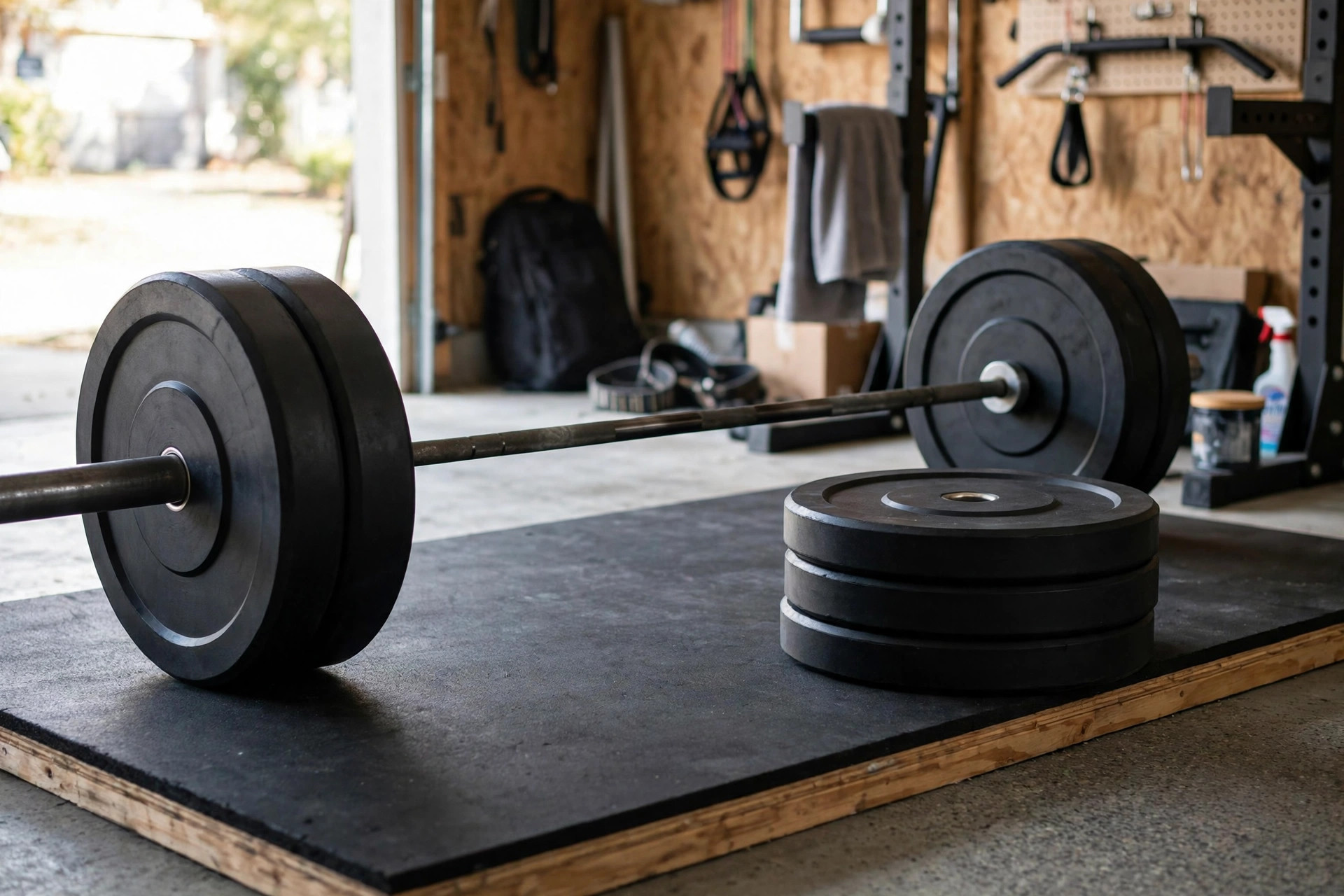
Iron plates are cheap, thin, and loud — drop a loaded barbell on them and the whole house knows about it. Bumper plates are solid rubber, all the same 450mm diameter, built to be dropped. That one difference is why they are the default plate for home gyms: they protect your floor, your bar, and your relationship with everyone else in the building. This guide covers the specs that matter, how much weight you actually need, and five sets worth buying.
Last updated: November 6, 2026 · Prices and availability checked November 2026.
Gym Gear Dialed is reader-supported. When you buy through links on our site, we may earn an affiliate commission. Learn more
Quick picks
In a hurry? These are this guide’s picks, in order — the full reasoning is in the sections below. Prices move fast, so check the current price before you decide.
| Product | Our take | Price |
|---|---|---|
| Rogue HG 2.0 Bumper Plates | Top pick | Check price → |
| REP Black Bumper Plates | Best value | Check price → |
| Fringe Sport Bumper Plates | Lowest bounce | Check price → |
| CAP Barbell Olympic Bumper Plates | Budget pick | Check price → |
| Titan Fitness Bumper Plates | Best for heavy sets | Check price → |
Why bumpers beat iron at home
Every bumper plate, from 10 lb to 55 lb, is the same 450mm (about 17.7 inch) diameter. That means the bar always starts at the same height off the floor — the correct deadlift height — whether you have 65 lb or 315 lb loaded. With iron plates, a light bar sits inches lower, which changes the lift and forces beginners to pull from blocks or a rack.
The second advantage is the drop. A bumper plate is a thick disc of dense rubber with a steel or brass hub. Dropped from overhead onto a platform or rubber floor, it bounces a few inches and stays put. Iron plates clang, chip concrete, dent bars, and transmit the impact straight into the floor — and into the rooms below. If you train Olympic lifts, do any overhead work to failure, or just live with other people, bumpers are not a luxury. They are the plate that makes the home gym workable.
The trade-off is space. A 45 lb bumper is roughly 3 inches thick; four of them per side eats over a foot of bar sleeve. Heavy lifters loading 500 lb+ will run out of sleeve before they run out of strength, which is why competition plates are thinner (and pricier). For most home gyms, that limit never arrives.
Specs that matter more than brand names
Diameter: true bumpers are 450mm. Cheaper “bumper-style” plates sometimes run smaller, which breaks the consistent bar-height advantage. Check the spec sheet, not just the name.
Durometer (hardness): measured on the Shore A scale. Softer rubber (around 85) deadens the bounce and is quieter; harder rubber (90+) bounces higher and lasts longer under heavy drops. Most good home-gym bumpers sit around 88. Very bouncy plates are a real annoyance — a bar that hops sideways after a drop is a bar you have to chase.
Weight tolerance: budget plates are often ±1% or worse of stated weight; better sets hold ±10 grams on competition plates and tighter than ±1% on training plates. For general training, ±1% is fine — a 45 lb plate that is actually 45.4 lb will not change your results. If you compete, tolerance matters more.
Insert: the center hub. Steel inserts are standard and durable; brass inserts are softer and grip the bar sleeve more gently but wear faster under heavy use. Either works at home-gym volumes. What matters is that the insert sits flush and does not rattle — a loose insert is the first sign of a cheap plate.
Width per plate: thicker plates eat sleeve length. If your bar has short sleeves (many budget bars do), wide 45s limit how much you can load. Check your bar’s loadable sleeve length against the total width of the set you plan to buy.
Smell: honest warning — cheap virgin-rubber bumpers can smell strongly for weeks. Recycled-rubber plates tend to smell less. If the gym shares air with the house, this is a real buying factor, and it is worth paying a little more for a low-odor set.
How much weight do you actually need?
Buy for the lifter you will be in a year, not the lifter you are today — but do not buy 500 lb of plates before you can deadlift 225. The standard starter set is 260 lb: a pair each of 10, 25, 35, and 45 lb plates, plus a pair of 5 lb change plates (iron or technique plates, since true 5 lb bumpers are too thin to drop safely). That loads a 45 lb bar to 305 lb, which covers most lifters for years.
A 160 lb set (pairs of 10, 25, 45) loads the bar to 205 lb and is the right call if you are new to barbell training or mostly doing Olympic-lift technique work. Add 25s and 35s later as you get stronger — bumpers are sold in pairs, so expanding is easy. One caution: 10 lb bumpers are thin and fragile. Never drop a bar loaded with only 10s, and never load a 10 as the only plate on the bar for overhead drops — it takes the full impact and cracks.
The picks
Top pick: Rogue HG 2.0 Bumper Plates
The default recommendation for a reason. The HG 2.0 line is a proven training plate with a steel insert, tight weight tolerance, and a low, controlled bounce. They are not the cheapest and not the thinnest, but they are the set most home gyms end up with after trying something else first. Check price on Amazon →
Best value: REP Black Bumper Plates
REP’s black bumpers match the HG 2.0 on the specs that matter — 450mm diameter, steel insert, low bounce — at a meaningfully lower price, especially in full sets. The finish is plainer and the branding is quieter, which suits a garage gym fine. Check price on Amazon →
Lowest bounce: Fringe Sport Bumper Plates
Fringe Sport built its name on low-bounce bumpers, and it shows: dropped bars stay close to where they land instead of hopping across the platform. If you train in a tight space or on a second floor, that control is worth more than a small price premium. Check price on Amazon →
Budget pick: CAP Barbell Olympic Bumper Plates
CAP is the entry point: widely available, often the cheapest per pound, and perfectly serviceable for a first set. Expect a slightly higher bounce, a stronger new-rubber smell, and looser weight tolerance than the picks above. For a beginner set you plan to upgrade later, that trade is fair. Check price on Amazon →
Best for heavy sets: Titan Fitness Bumper Plates
Titan’s urethane and economy lines both run thinner than standard rubber bumpers, so more weight fits on the sleeve — useful once you are loading 400 lb and up. Their sets are also priced aggressively in the 300+ lb bundles. Check sleeve length on your bar before ordering a big set either way. Check price on Amazon →
What to check before you click buy
- Your bar: bumpers need a 2-inch Olympic sleeve. Standard 1-inch bars will not fit them. If your bar is a budget bar with short sleeves, measure the loadable length against the width of the set you want.
- Your floor: bumpers still need a platform or rubber flooring — dropping on bare concrete cracks plates over time and punishes the slab. See our home gym flooring guide for mats, tiles, and rolls.
- Your rack: plate storage matters more than people expect. A set of bumpers eats a lot of floor space; a vertical plate tree or wall storage keeps the gym usable. Factor it into the budget, and see our budget power rack guide if you are still choosing a rack.
- Shipping: plates are heavy and shipping is often where the real price hides. Compare the delivered price of a set, not the headline price — and check whether the seller ships pairs or singles, since some listings price per plate.
- Change plates: a pair of 2.5 and 5 lb iron change plates rounds out any bumper set for small jumps. Bumpers jump in 10 lb increments per side at minimum, which is too big a step for overhead pressing progress.
Keeping them alive: care in 30 seconds a week
Wipe plates down after sweaty sessions — chalk and sweat grime build up on rubber fast. Store them on a rack or leaned vertically, not stacked flat in a corner where the bottom plates collect moisture. Keep them out of direct sunlight and away from heaters; UV and heat age rubber faster than drops do. Once a month, check that inserts sit flush and no plate wobbles on the bar — a loose insert is a plate to retire from drop work. That is the entire maintenance routine, and a good set lasts a decade on it.
Frequently asked questions
Can you drop bumper plates on concrete?
Technically yes, occasionally — but repeated drops on bare concrete crack plates and chip the slab. A platform or rubber mats are cheap insurance; see our flooring guide.
Are bumper plates quieter than iron?
Much quieter. The rubber absorbs the impact instead of ringing like a bell. They are not silent — a dropped 315 lb bar still thuds — but the difference is the difference between a workout and a noise complaint.
Do I need competition plates?
Only if you compete or load very heavy. Competition plates are thinner, calibrated to within grams, and color-coded — and they cost roughly twice as much. Training bumpers are the right call for nearly every home gym.
Why are 10 lb bumper plates so fragile?
They are thin — there just is not much rubber to absorb the impact. Never drop a bar with only 10s on it, and always pair 10s with a heavier plate when doing overhead work.
Can I mix brands?
Yes, as long as every plate is a true 450mm bumper. Mixed brands with the same diameter stack and lift identically. The one thing to avoid is mixing bumpers with iron plates on the same side of the bar for drops — the iron plate changes how the bumper flexes.