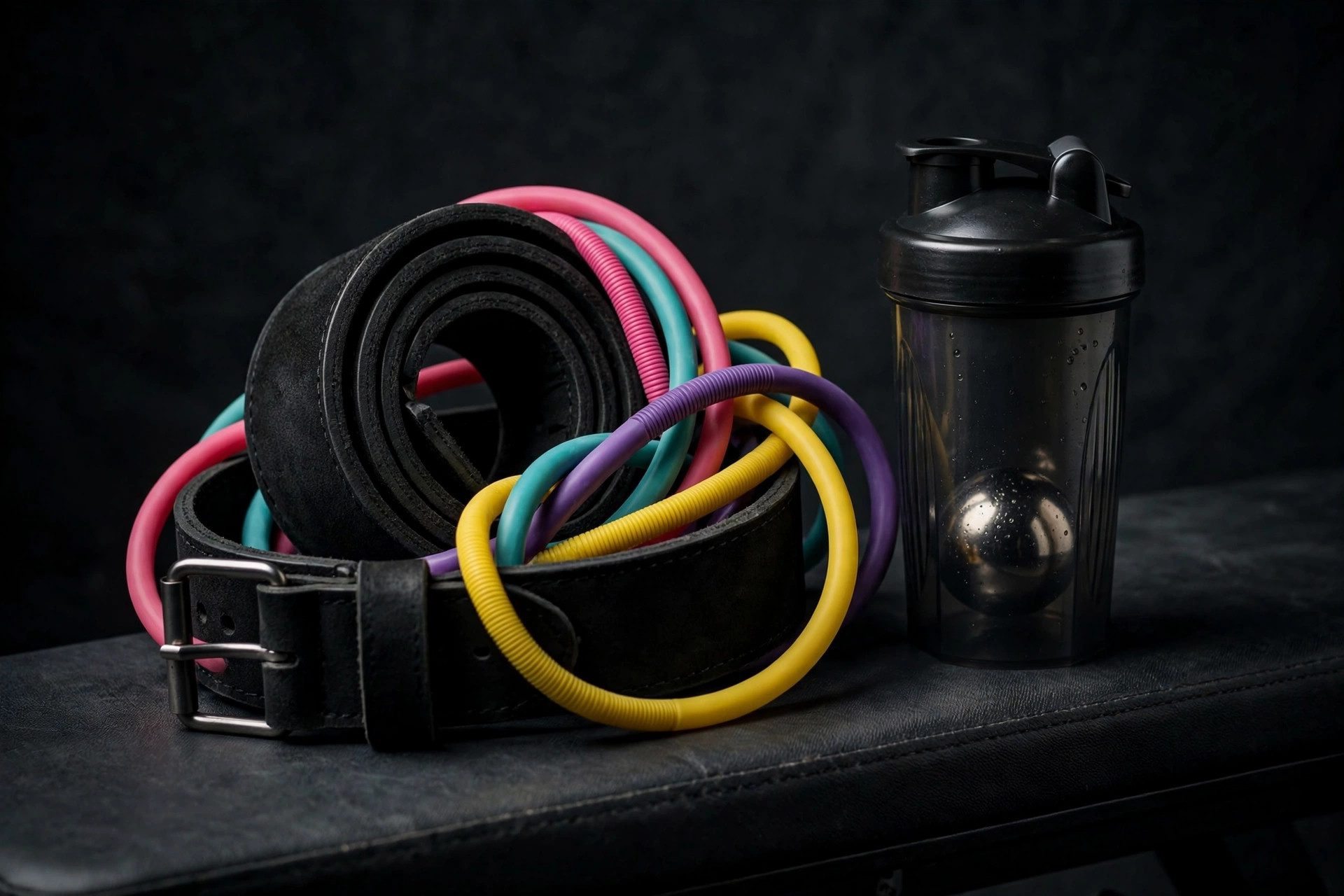
Gym gear is an investment — even the cheap stuff — and most of it dies from neglect, not wear. This guide gives you a washing schedule and storage habits for the gear you touch every session: water bottles, gym bags, belts, bands, shoes, earbuds, and shaker bottles, so everything lasts as long as it should.
Water bottles and shaker bottles: the immediate-rinse rule
Protein residue is the enemy. A shaker with leftover shake becomes a bacterial swamp within hours — warm, dark, full of nutrients. The rule is simple: rinse immediately after you finish, with hot water, every single time. No exceptions, no “I’ll do it at home” — by home, the smell has already started.
Daily: wash with hot soapy water and a bottle brush that reaches the bottom. Pay attention to the lid threads, the spout, and any rubber gaskets — that is where residue hides and where the smell lives.
Weekly: deep clean. Fill with hot water and a tablespoon of baking soda, or use denture-cleaning tablets (cheap, effective, designed for exactly this). Let it soak for 30 minutes, scrub, rinse thoroughly. For stainless steel bottles, avoid bleach — it can pit the steel and damage the finish.
Storage: never store a bottle sealed while damp. Leave the lid off or cracked until it is fully dry. A bottle that smells even after washing usually has a gasket that needs replacing or a deep clean it never got — replace silicone gaskets yearly.
Gym bags: airing, washing, and smell control
Gym bags do not get dirty from one session — they get dirty from never drying between sessions. The single most important habit: when you get home, unzip the bag fully and leave it open. A closed, damp bag is a petri dish.
Weekly or so, empty the bag completely and shake it out — chalk dust, crumbs, and mystery grit accumulate fast. Wipe the interior with a damp cloth and a drop of dish soap. For fabric duffels, most are machine washable on gentle: check the care tag, remove any stiff inserts, wash cold, and air dry completely (never a hot dryer — it melts waterproof coatings and warps structure).
For persistent odor: sprinkle baking soda inside, leave overnight, shake out. If the smell survives that, the bag needs a full wash. And keep a small mesh laundry bag inside for dirty clothes — it keeps sweat off the bag’s interior and makes laundry day a one-step job.
Belts, bands, and shoes: material-specific care
Leather lifting belts are the only gym item that genuinely improves with age — if you care for them. Wipe down with a dry cloth after use, and occasionally condition the leather with a leather balm to prevent cracking. Never soak a leather belt, never machine wash it, and store it flat or loosely rolled — hanging it folded over a hook creases the leather permanently.
Nylon and velcro belts are lower maintenance: wipe down, and machine wash occasionally in a garment bag to protect the velcro. Keep velcro tabs closed when washing so they do not collect lint.
Resistance bands need inspection more than cleaning. Before each use, run the band through your hands and look for nicks, tears, and surface cracking — especially near the ends. A damaged band under tension can snap back hard. Wipe with a damp cloth when dusty, and store away from direct sunlight: UV degrades latex faster than anything else. Never leave bands in a hot car.
Shoes: rotate if you can — two pairs of training shoes last more than twice as long as one, because the foam needs recovery time between sessions. Pull the insoles out after workouts to air them, and never machine wash or tumble dry training shoes unless the manufacturer says so — heat breaks down the glues and foams. For odor, baking soda overnight or cedar shoe inserts work; stuffing shoes with newspaper after wet sessions speeds drying.
Earbuds and small electronics: wipe down and case hygiene
Earbuds live in your ears during your sweatiest hour and then sit in a dark, warm case. Wipe the earbuds with a slightly damp cloth after each workout — pay attention to the speaker mesh, where wax and sweat cake on and muffle sound over time. A soft dry toothbrush clears the mesh without pushing grime in.
The case needs attention too: wipe it out weekly, and do not put wet earbuds back in — let them air dry first. Moisture trapped in the charging case corrodes the charging contacts, which is the most common way workout earbuds die.
For fitness trackers and watches: rinse the device and band after sweaty sessions, especially if you use sunscreen or chalk. A tracker that smells is a band problem, not a device problem — bands are replaceable.
The pattern is simple: rinse what touches food or drink, dry what touches sweat, inspect what holds tension or load. Fifteen minutes a week total, and your gear lasts years instead of months.
What this guide does not cover
This guide covers cleaning and maintenance, not repair — it will not tell you how to re-sole shoes, re-stitch a torn bag, or fix electronics, which are jobs for a cobbler, a tailor, or the manufacturer’s warranty service. It also does not cover gym hygiene etiquette beyond gear care (wiping down equipment is covered in our packing guide). If gear is damaged in a way that affects safety — a cracked belt, a frayed cable, a band with deep nicks — retire it rather than trying to salvage it.
Frequently asked questions
Why does my shaker bottle smell even after washing?
The smell lives in the lid gasket, the spout threads, and any textured interior corners — places a quick rinse never reaches. Disassemble the lid fully, scrub the gasket with a brush, and do the baking-soda soak. If the smell persists, replace the gasket or the bottle.
Can I put my gym bag in the washing machine?
Most fabric duffels, yes — gentle cycle, cold water, air dry. Check the care tag first, remove stiff inserts and detachable straps, and close all zippers and velcro. Leather bags and bags with rigid frames should be spot-cleaned only.
How do I know when resistance bands need replacing?
Look for surface cracking, thinning spots, nicks at the edges, or a band that has lost its snap and feels gummy. Any visible tear means immediate retirement — a band that snaps under full stretch can cause a real injury.
How often should I replace running or training shoes?
The common guideline is 300–500 miles for running shoes; for gym-only training shoes, go by feel — compressed, lopsided foam and worn tread mean replacement time. Rotating two pairs extends the life of both.