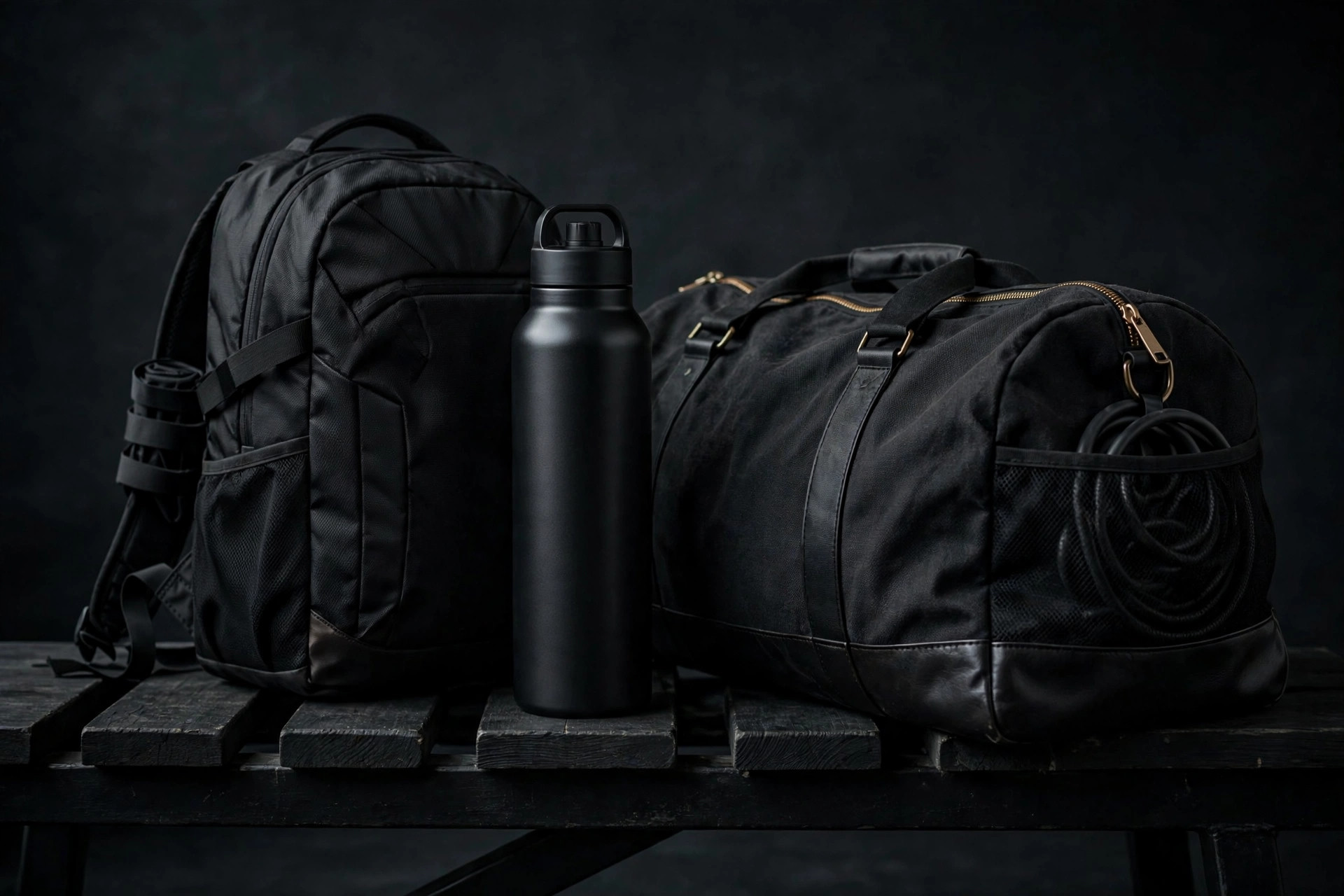
A well-packed gym bag means you never cut a workout short because you forgot something. This guide gives you the core list every gym-goer needs, add-ons for lifters, runners, swimmers, and class-goers, a “leave in the bag” system that ends last-minute repacking, and a slimmed-down version for travel days.
The core list: what goes in every gym bag
Most people overthink this. The essentials fit into six categories, and if you nail these, you are covered for almost any session.
- Shoes. Dedicated training shoes you do not wear as everyday shoes. This protects the tread and keeps gym floors out of your daily life. If you train outside, a second pair is worth it — trail or road shoes get filthy fast.
- Clothes. One full change: shirt, shorts or leggings, socks, and underwear. Synthetic or merino blends dry faster and smell less than cotton. Keep a spare pair of socks in the bag permanently — wet feet end workouts.
- Water bottle. A reusable bottle with a cap you can open one-handed. Fill it before you leave; the “I’ll fill it there” plan fails whenever the fountain is crowded or broken.
- Towel. A medium microfiber towel for wiping down equipment and a small one for your face if you sweat a lot. Microfiber packs small and dries fast — cotton gym towels are bulky and stay damp.
- Lock. A combination padlock, not a keyed one. Keys get lost; combinations don’t. Set the code to something you can recall mid-workout, and write it in your phone’s notes app as backup.
- Toiletries. A travel kit with shampoo, body wash, deodorant, and anything else you need to shower at the gym. Decant into small bottles — full-size bottles are heavy and leak.
Add earbuds and a phone armband or pocket-friendly way to carry your phone if you train with music or follow a program. That is the baseline. Everything else is situational.
Add-ons by training type
Different training means different needs. Pack these only if they match what you actually do — the whole point is a bag that fits your life, not a mobile sporting goods store.
Lifters: a lifting belt, wrist straps, and a chalk alternative. Belts support heavy compound lifts; straps help when your grip gives out before your target muscles do; liquid chalk or grip paste keeps the knurling honest without the mess of block chalk. A notebook or app for logging sets is part of the lifter’s kit too — memory is a terrible training log.
Runners: extra socks (cotton socks plus sweat plus miles equals blisters), anti-chafe balm for long runs, and a lightweight rain shell if you run outdoors. Keep a spare pair of laces in the bag — a broken lace mid-run is a small problem you can solve in two minutes if you are prepared.
Swimmers: goggles, a swim cap, two towels (one for the pool deck, one for the shower), and a waterproof bag or wet pouch for your suit afterward. Swimmers also want ear drops or a quick-dry earbud alternative, and flip-flops for the locker room floor — non-negotiable for hygiene.
Class-goers: check what the class provides before you pack. Spin and indoor cycling classes usually need cycling shoes only if you have clip-in pedals; yoga and Pilates need grippy socks and a mat strap if you bring your own mat; boxing needs hand wraps at minimum, gloves if the gym doesn’t lend them. A small carabiner on your bag holds wraps and towels between rounds.
The “leave in the bag” system
The number one reason gym bags fail is repacking. Every session becomes a memory test: “Did I put the socks back?” The fix is simple — some things live in the bag forever.
Your permanent residents: the lock, the towel, the toiletries kit, a spare pair of socks, earbuds and their charger, a pen or your logbook, and one emergency item per your training type (straps for lifters, spare laces for runners). These never come out except to be washed or replaced.
Your per-session rotation: shoes (air them out at home), clothes, water bottle, and any training-day-specific gear. That’s it — four categories to think about instead of twelve.
After each workout, do a two-minute reset: dirty clothes into the hamper, bottle rinsed, towel into the wash pile, bag left open to air out. This habit eliminates the “I forgot my” problem permanently.
Travel-day version: the hotel-gym bag
Travel training works best when you pack assuming the worst: a hotel “fitness center” with two treadmills and a rack of dumbbells that tops out at 25 pounds.
Pack light: resistance bands (they weigh nothing and cover pulling and pressing when dumbbells run out), a jump rope for conditioning, running shoes, one training outfit, and your water bottle. That combination handles a full-body session anywhere.
Put your workout first in the day if the schedule is tight, because meetings and dinners expand to fill available time — and confirm the gym’s hours before you plan around them, since hotel gyms close earlier than you think.
What this guide does not cover
This is a packing guide, not a training program or a medical resource. It does not tell you which exercises to do, how much weight to lift, or how to treat an injury — for that, work with a certified trainer or a qualified medical professional, especially if you have a health condition or are returning from injury. It also does not review specific brands; check return policies and warranty terms yourself before buying.
Frequently asked questions
How big should my gym bag be?
Big enough that you are not stuffing it shut, small enough that it fits in a standard gym locker. For most people, a 30–40 liter duffel or backpack is the sweet spot. If you are a swimmer or carry full lifting gear, go bigger; if you only need clothes and a bottle, a 20-liter pack is plenty.
Should I use a duffel or a backpack?
Duffels swallow bulky items (belts, shoes, towels) more easily; backpacks ride better on bikes and public transit and keep your hands free. Many gym-goers end up with a backpack for daily use and a duffel for heavy lifting days or travel.
How often should I wash my gym bag?
Wipe down or air out the inside after every sweaty session, and wash the whole bag every few weeks — sooner if it starts to smell. A bag that smells like a locker room is usually a bag that never fully dries between sessions.
What is the one item people forget most?
Socks. It is almost always socks. The fix is the “leave in the bag” system: one spare pair lives in the bag permanently and never comes out except to be washed.