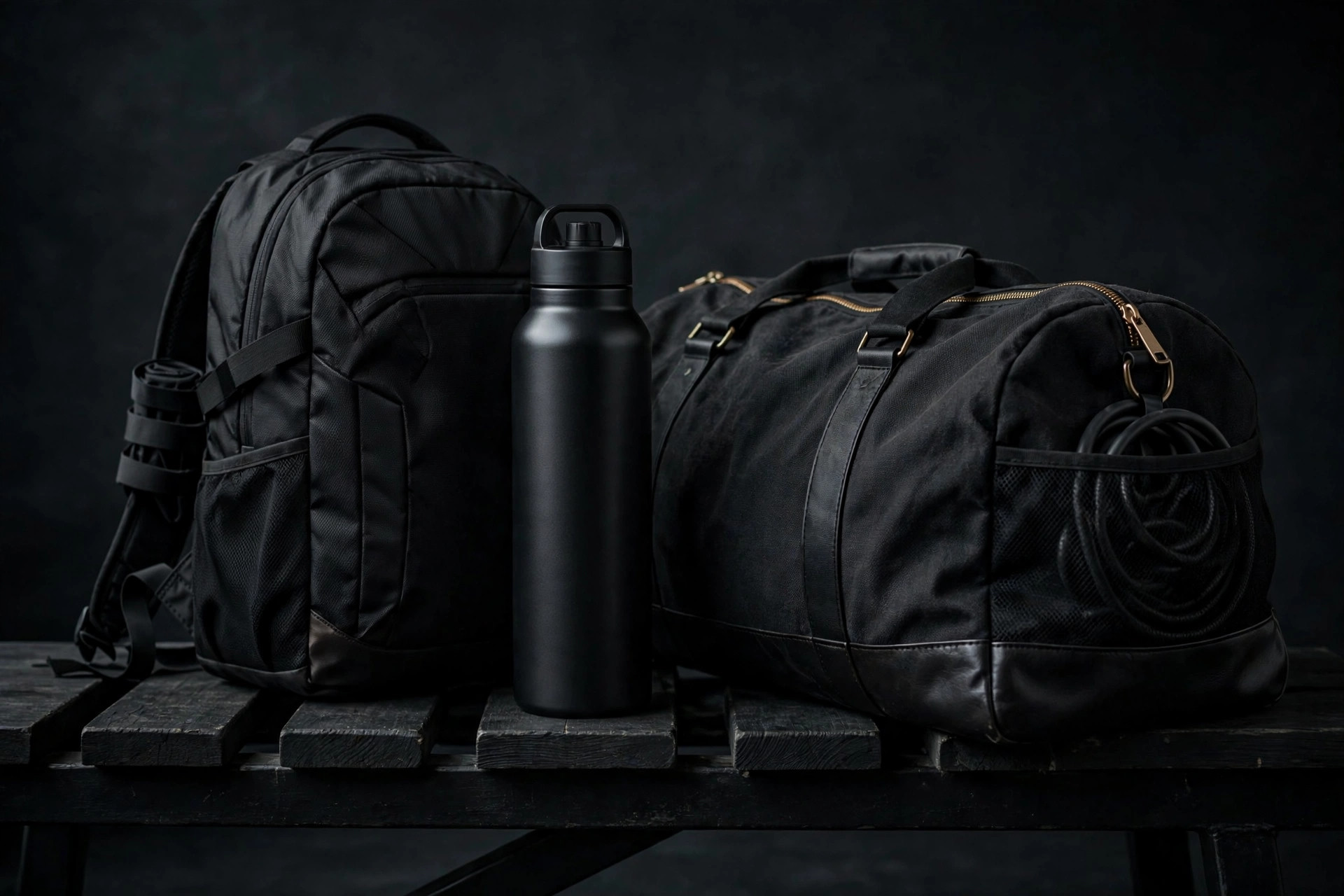
Duffel or backpack? The answer depends less on fashion than on what you carry and how you get to the gym. This guide lays out the honest pros and cons of each, the features that separate a good gym bag from a tote with delusions of grandeur — shoe garages, ventilated pockets, real water resistance — and a simple way to size your bag to your routine, whether you lift, take classes, or commute straight from the office.
The duffel: maximum capacity, minimum organization
The duffel’s superpower is volume. A medium duffel swallows a belt, shoes, a change of clothes, a towel, and a shaker without breaking a sweat, and the wide opening means you can see and grab everything at once — no digging. For lifters carrying bulky gear (lifting belt, knee sleeves, wrist wraps, shoes), the duffel is the natural choice simply because everything is big and round-ish things pack better into a tube than a slab.
The weaknesses are real. One big compartment means everything migrates to the bottom: clean clothes end up against sweaty ones, small items vanish, and your shaker leaks onto everything because nothing is separated. Duffels carried by hand or over one shoulder get uncomfortable on longer walks, and they’re awkward on public transit or a bike. If your duffel has no end pocket for shoes, your sweaty trainers are sharing air with your work shirt — check for that pocket before anything else.
The backpack: organization and carry comfort, limited bulk
A gym backpack wins on the commute. Two straps distribute weight evenly, it rides fine on a bike or crowded train, and it doesn’t announce “gym” the way a duffel does — useful if you’re heading to the office after. Modern gym backpacks have dedicated laptop sleeves, so one bag can genuinely serve work and training, and the smaller compartments keep keys, cards, and earbuds findable.
The tradeoff is bulk capacity. Backpacks are narrower and shallower than duffels, so a lifting belt, two pairs of shoes, or a bulky winter outfit won’t fit gracefully — you’ll be stuffing, and stuffed bags wear out faster. If your gym kit is lean (one outfit, one pair of shoes, a bottle, a lock), a backpack is perfect. If you need to haul serious gear, you’ll be fighting the bag every morning. Be honest about your kit’s real size; the bag should fit your gear, not your aspirations.
Features that actually matter
Regardless of style, four features separate good gym bags from bad ones. First, a separate shoe compartment — ideally a ventilated one. Keeping worn shoes away from clean clothes isn’t a luxury; it’s the difference between a bag that smells neutral and one that smells like a locker room. Second, ventilation somewhere: mesh panels or a vented pocket for damp towels and sweaty clothes, because sealed-in moisture breeds odor fast.
Third, water resistance on the exterior. You don’t need a dry bag, but a bag that shrugs off rain on the walk in and protects its contents from a spilled bottle is worth paying for — look for coated fabrics and covered zippers rather than trusting marketing words like “weatherproof” without details. Fourth, zippers and straps that survive daily use: chunky zippers that don’t snag, straps with real padding, and stitching that doesn’t pucker. A gym bag gets yanked, stuffed, and dragged daily; cheap hardware fails within months, and a broken zipper is the most common cause of bag death.
Sizing by routine: lifter, class-goer, commuter
Lifters: go duffel, 30–40 liters, with a shoe pocket and room for a belt. You need volume for bulky gear and you’ll appreciate the wide opening on a crowded gym floor. Class-goers (yoga, spin, HIIT): a smaller bag works — 20–30 liters, duffel or backpack, with ventilation for damp clothes and a pocket for a phone and keys you can grab mid-class. Your kit is compact, so prioritize organization over raw space.
Commuters: backpack, with a laptop sleeve and a separate gym compartment if possible. The goal is one bag that transitions from train to office to gym without repacking everything twice a day. A quick test before buying: pack your actual kit — all of it, including the shoes — and see whether the bag closes without force. If the store or your living room won’t let you do a real test pack, estimate honestly and size up one notch; gym bags that are slightly too big are a minor annoyance, while bags that are slightly too small are a daily fight.
What this guide does not cover
This is a bag-buying guide, not a travel guide. It doesn’t cover luggage, weekender bags, or airline carry-on compliance — a gym bag you occasionally fly with has different priorities than a gym bag you carry daily. It also skips specialty bags (camera-style gear bags, martial arts gear bags with gi compartments) and says nothing about securing valuables: no bag is theft-proof, and for anything you can’t afford to lose, a locker and a lock beat any bag feature. Gym bag hygiene (washing schedules, odor treatments) gets a mention above, but deep fabric care is beyond this guide’s scope.
Frequently asked questions
What size gym bag do I actually need?
Most people land between 25 and 40 liters. Pack your real kit — shoes, clothes, towel, bottle, lock — and measure that; then buy the bag that holds it with a little room to spare. When in doubt, size up slightly.
How do I keep my gym bag from smelling?
Empty it after every session, never leave damp clothes in it overnight, use the ventilated pocket for anything sweaty, and wash the bag itself periodically per its care label. The smell comes from sealed-in moisture, not from the bag.
Can one bag work for both gym and office?
Yes, if you commute with a laptop — get a backpack with a padded laptop sleeve and a separate compartment or packing cube for gym clothes. Keep work items and sweaty items physically separated or the commute will ruin both.
Duffel with wheels — worth it?
Only if you genuinely haul heavy gear long distances, like across a large parking structure daily. For most people, wheels add weight, cost, and bulk that outweigh the convenience. Your back will tell you if you’re the exception.