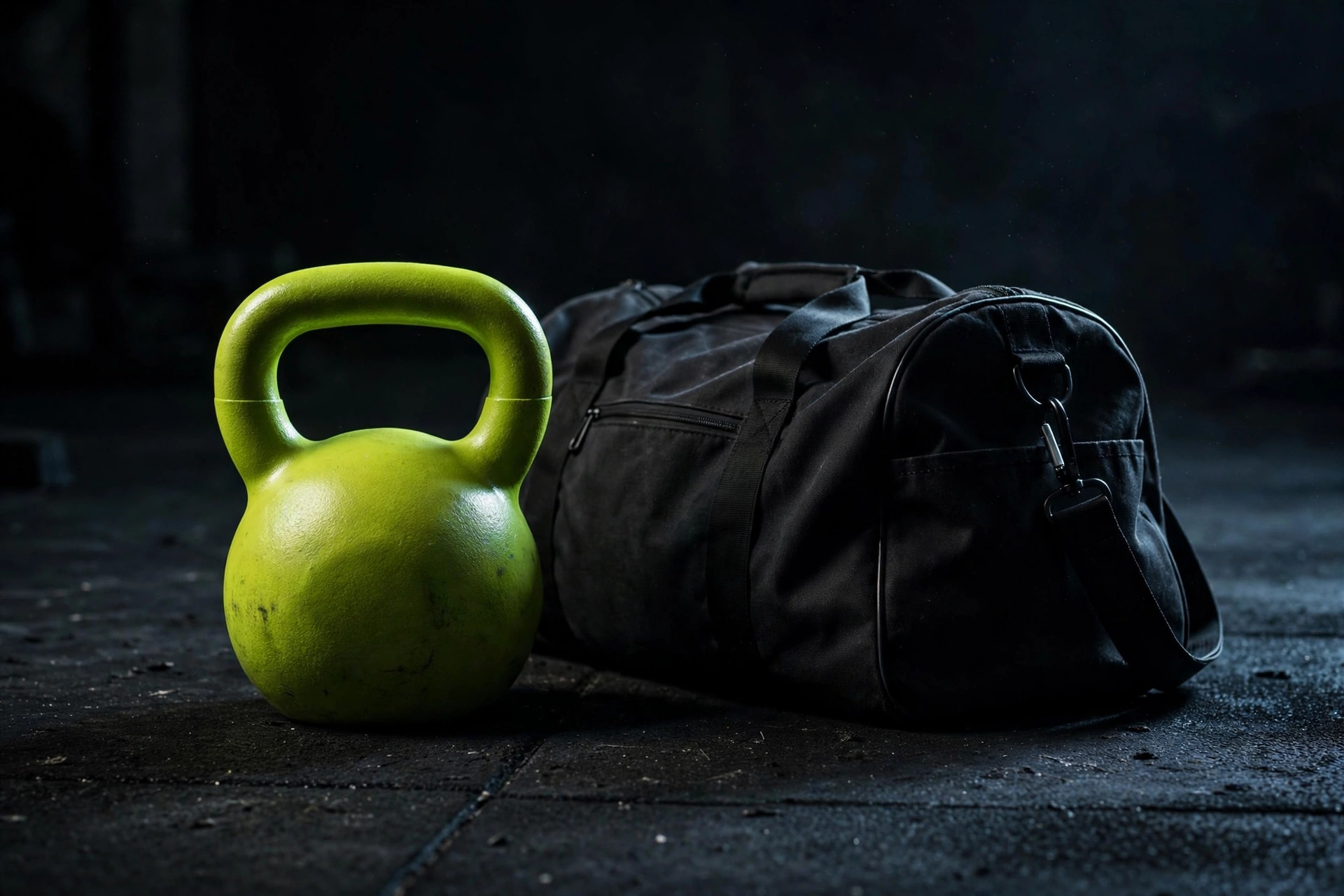
A set of fixed kettlebells from 15 to 50 pounds is five or six bells, several hundred dollars, and a full corner of your garage. An adjustable kettlebell compresses that whole set into a single bell — one handle, one footprint, and weight changes in seconds. This guide breaks down the three adjustment systems, the specs that matter for swings and presses (not just the marketing numbers), and how to pick the bell you will still be swinging in five years.
Why one adjustable bell beats a rack of fixed bells
Kettlebells earn their place because of the hinge: swings, cleans, snatches, and carries train the posterior chain, grip, and conditioning in ways dumbbells and barbells do not replicate well. The problem is the ladder. Kettlebell progressions run in small jumps — 8kg to 12kg to 16kg to 20kg to 24kg — and each rung is a separate $40–$120 bell taking up floor space. Most home gyms end up with two bells and a gap exactly where progress stalls.
An adjustable bell solves the math the same way adjustable dumbbells do: one unit covering 10–40 lb (or more), the footprint of a single bell, and a price between $100 and $300 depending on the system. For a spare bedroom, garage corner, or apartment, it is the highest value-per-square-foot conditioning purchase you can make.
The trade-offs are real. Adjustable bells are bulkier than a fixed bell of the same weight, the shell shape changes how the bell sits on your forearm in cleans and snatches, and — critically — you cannot drop most of them. If your training style involves failed snatches hitting the floor, read the drop section before you buy anything.
The three adjustment systems, explained
Dial-selector: twist a dial on the base and the handle picks up only the selected plates from the cradle, like adjustable dumbbells. Weight changes take seconds, which is ideal for complexes and EMOM workouts where the bell weight changes every few minutes. Downsides: the mechanism is complex, the bell is large even at light weights (the shell stays full-size), and most are explicitly not droppable — a drop can crack the selector and void the warranty.
Pin-lock / stackable: you stack weight plates inside or under the bell body and lock them with a pin or screw. Simpler and tougher than dial systems, usually with a more traditional bell shape, and many are rated for controlled drops. Downsides: changing weight takes 30–60 seconds per change (fine for straight sets, annoying for complexes), and the increments depend on the plates included.
Plate-loadable handle: a kettlebell-shaped handle you load with standard 1-inch or 2-inch plates and lock with collars. The cheapest route (often under $100 before plates), nearly indestructible, and uses plates you may already own. Downsides: the wide plate stack changes the bell's balance, the handle window can be cramped, and loading plates between sets is slow. Best as a budget entry or a second heavy bell.
Rule of thumb: if your workouts change bell weight frequently — complexes, density circuits, partner workouts — the dial system earns its premium. If you do straight sets of swings and presses with rest between, pin-lock saves money and survives longer. If you are testing whether kettlebell training sticks, the plate-loadable handle is the cheapest experiment.
Specs that matter more than brand names
Handle diameter: 33–35 mm is the standard that feels like a real kettlebell. Thicker handles quietly limit your pulling and snatch volume because grip becomes the bottleneck; thinner handles feel toy-like and can dig into the hand. Powder-coated steel is the ideal finish — grippy with chalk, not slippery with sweat, and it does not chew your hands like raw knurling or peel like chrome.
Handle window: the opening must fit both hands comfortably for two-handed swings, with room to spare. Adjustable bells with cramped windows force a narrow grip that wrecks swing mechanics. Check owner photos, not product renders — renders lie about window size.
Shell shape and forearm contact: in cleans and snatches, the bell body lands on the back of your forearm. Fixed bells have a smooth curved body; some adjustables have flat faces, seams, or plate edges that bruise. If you do a lot of cleans, prioritize a bell with a rounded, smooth body — or accept wrist guards as part of the kit.
Increments: 2–5 lb jumps are ideal. Kettlebell movements are ballistic — a 10-lb jump in swing weight is a big jump. Systems with fine increments let you progress presses and Turkish get-ups without stalling.
Weight range honesty: most adjustables run roughly 10–40 lb. That covers beginners through solid intermediates. If you already swing a 24kg (53 lb) bell, check whether the system offers expansion — some do not, and buying a bell you will outgrow in a year is the most expensive kind of cheap.
How much to spend: three honest tiers
Under $100 — plate-loadable handle: the handle plus plates you own or buy used. Ugly, slow to change, nearly indestructible. Perfect for testing whether kettlebell training sticks before spending real money. Budget for locking collars — standard spin collars loosen under swing forces.
$100–$250 — pin-lock adjustables: the sweet spot for most home gyms. Fast-enough changes, honest bell feel, and durability that survives real training. Check reviews specifically for rattle (plates should lock solid — a rattling bell changes the swing feel) and for the locking mechanism's longevity.
$250–$350 — premium dial systems: fastest weight changes, cleanest look, best for complexes and coached-style programming. Worth it if you train four-plus days a week and will use the bell for a decade. Not worth it if you are still in the "will I stick with this?" phase — and remember the no-drop rule, which is non-negotiable on dial mechanisms.
What to check before you click buy
- Drop policy in writing: "do not drop" in the manual means the warranty dies with the first drop. If you train to failure, this alone decides the system.
- Rattle test: search reviews for "rattle" and "loose." Plates that shift mid-swing change the bell's center of mass unpredictably — annoying at best, a wrist injury vector at worst.
- Cradle or base included: dial systems need their tray to select weights. Confirm it is in the box, not a separate purchase.
- Floor protection: 40 lb of iron wants proper flooring even when you never drop it — setting a loaded bell down hard on concrete chips both.
- Return policy: kettlebells are heavy and expensive to ship back. Buy from a seller with free returns.
Starting out: the two moves that matter
If you are new to kettlebells, the entire sport starts with two movements: the two-handed swing and the goblet squat. The swing is a hip hinge, not a squat — power comes from the hips snapping forward, arms just guide the bell. Learn it light (12kg for most men, 8kg for most women is the classic starting point) and film yourself from the side; the number one beginner error is squatting the swing, which loads the knees instead of the hips.
Do not start with snatches, Turkish get-ups, or one-handed swings. Those are month-two skills. Four weeks of crisp two-handed swings and goblet squats, three days a week, builds the hinge pattern and grip endurance everything else depends on. An adjustable bell shines here: start at the light end, add weight in small jumps as form solidifies, and you never outgrow the equipment — the equipment grows with you.
Frequently asked questions
Are adjustable kettlebells good for beginners?
Yes — arguably better than fixed bells for beginners, because the correct starting weight varies by movement and you will progress quickly in the first months. The ability to drop 5 lb for learning the clean, then add it back for swings, is exactly what a beginner needs.
Can you drop an adjustable kettlebell?
Dial-selector types: no — dropping can break the mechanism and void the warranty. Pin-lock and plate-loadable types: generally yes within reason, especially onto rubber flooring. If you regularly train to failure on snatches, choose accordingly.
What weight should I start with?
Most men start swings at 16kg (35 lb) and presses at 12kg; most women start swings at 12kg (26 lb) and presses at 8kg. When in doubt, start lighter — a bell you can control teaches the hinge; a bell that controls you teaches bad habits.
Adjustable kettlebell vs. adjustable dumbbells — which first?
Different tools. Dumbbells cover presses, rows, and slow strength work; kettlebells cover ballistic hinge work and conditioning. If you can only buy one, pick based on your training: slow strength favors dumbbells, power and conditioning favor the bell. Most complete home gyms end up with both.